A sewer-line valve can stop a backup, if the house has sewer
Backwater valves sit on a house's sewer lateral and close against sewage flowing back toward the house. FEMA says they should go in the sanitary lateral, preferably outside the home. They apply to homes on public sewer, and installation belongs with a licensed plumber.
Compiled from the sources listed at the end. Sources checked .
For houses on septic or sewer, in all our towns.
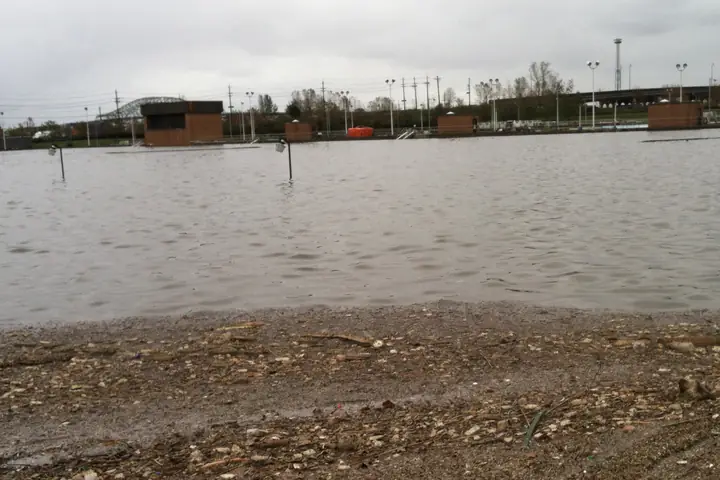
A sewer lateral is the private pipe from the house to the main. In a flood, FEMA's P-348 manual warns, drain and vent piping can act as a conduit for floodwater. Pipes that carry waste out can carry water in. A house on septic has a different problem, covered in our story on septic after a flood, and if you are not sure which you have, start with our brief on septic or sewer.
What should you do when sewage is backing up now?
Stop using every drain in the house. That means no flushing, no washer and no dishwasher, because anything you send down has nowhere to go and may come up at the lowest fixture. Stay clear of the sewage, keep children and pets out, and call a licensed plumber or your sewer utility.
What does FEMA say about these valves?
FEMA says they belong on the lateral. The manual's own words, typo included, read: "Backflow values [sic] should be installed in the sanitary sewer lateral." It prefers a location outside the home, before the lateral enters the basement or crawlspace. It also lists the sewer lateral, the drain and vent piping and backwater valves among primary plumbing components in its Fact Sheet 3.4.3.
FEMA's advice is national, and this story does not cite the New Jersey plumbing code. Your plumber and the local plumbing inspector will work from the current code.
Which kinds of valve are there?
P-348 names check, gate and ball float valves. They work differently, and the differences matter to the person choosing one for your line.
| Type | How it generally works |
|---|---|
| Check | A flap lets flow pass one way and shuts against reverse flow |
| Gate | A gate is closed to block the line |
| Ball float | A float rises with backflow and seals the opening |
Names from FEMA P-348, 2nd edition, 2017; descriptions are the common meanings
Go to the maker's documents for any model you are shown.
Where does the valve go, and what does it protect?
Outside the home is FEMA's preference. The video on this page, a City of Toronto explainer from 2021, adds that the valve should be placed so all basement fixtures are protected, and that it needs upkeep. Its subsidy is for Toronto. Local permit rules are not part of it.
That video assumes a basement. If your house has a crawlspace, slab or raised floor, ask the plumber which fixtures sit low enough to matter, and whether the valve can be reached later for service.
Can you still use water when the valve is closed?
Not safely. The Toronto engineer's warning is that while the valve is closed, water you run has nowhere to go and can end up in the house. So the valve protects you from the main only if you stop using drains during the event. Tell everyone in the house and anyone renting it.
Do you need a permit and a licensed plumber?
Expect both, and confirm with the construction office. The state's permit section, 5:23-2.14, requires one for regulated plumbing work, leaving out ordinary maintenance and certain emergencies. Clearing a stoppage is on the ordinary maintenance list. A new valve cut into a sewer lateral is not named there. Our story on plumbing permits has more.
Permit work is for a New Jersey licensed master plumber, and N.J.A.C. 5:23-2.15 excepts owners working on the single-family house they live in. This is a digging job on a line full of sewage. Hiring is worth reading first.
Also asked
Will a backwater valve help a house on septic?
It is a device for a lateral running to a public sewer, and the FEMA wording is about that pipe. A septic house with a back-up should read the state rule's malfunction signs and call the board of health.
How would I know if my house already has one?
Ask the seller and check the permit file at the construction office. A plumber can also look for an access cover on the lateral, and may run a camera through a cleanout.
Does the valve stop flood water coming through the walls?
No. It deals with flow coming back up that one pipe. Flood openings, equipment height and the rest are separate questions, some of them covered in our high water story.
Who do I call when the backup is in the street?
Your sewer utility or town public works. The Ocean County Utilities Authority's customers are largely local systems like these, so start with the town.
Who to ask
- Your town's sewer department or utility: ask whether the backup is on their side and who owns the lateral between your house and the main.
- Your municipal construction office: ask whether the valve needs a permit and what inspection follows.
- The state's license verification page at New Jersey Consumer Affairs: check a plumber's license before work starts.
Where this comes from
- FEMA P-348, Protecting Building Utility Systems from Flood Damage (2017) - valve wording, types, drain piping as a conduit.
- FEMA P-2181 Fact Sheet 3.4.3 - plumbing components.
- N.J.A.C. 5:23-2.14 - permits and emergency work (text on Cornell's Legal Information Institute).
- N.J.A.C. 5:23-2.15 - licensed work and homeowner exception (text on Cornell's Legal Information Institute).
- N.J.A.C. 5:23-2.7 - ordinary maintenance list (text on Cornell's Legal Information Institute).
- Ready.gov, Floods - wet electrical equipment.