Selling a house with a cesspool usually means the cesspool has to go
A cesspool at sale in New Jersey generally has to be abandoned and replaced with a septic system. The rule took effect June 2, 2012, and it lists exceptions for certain transfers. A malfunctioning cesspool gets no exemption.
Compiled from the sources listed at the end. Sources checked .
For houses on septic or sewer, in all our towns.
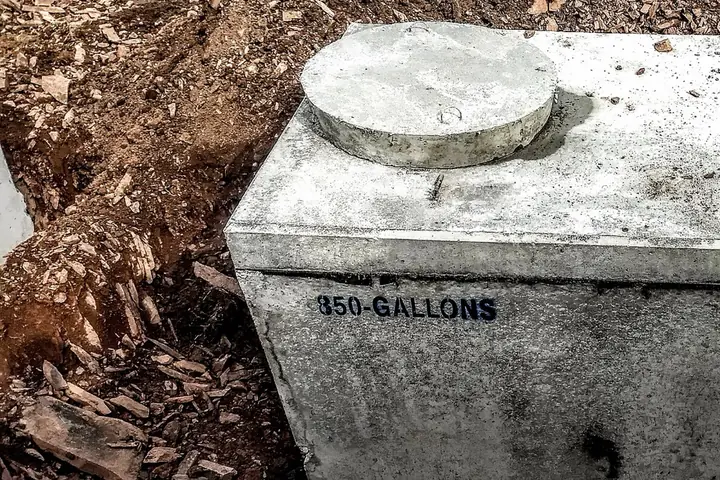
The rule is N.J.A.C. 7:9A-3.16. It opens by saying that cesspools, privies, outhouses, latrines and pit toilets "are not systems," which is how the state sets them apart from a tank and disposal field. In ordinary words, a cesspool is a pit that takes the house's waste directly. If an old Ocean County house has never had a septic permit on file, that is a question worth asking before you make an offer.
Which transfers does the rule catch?
An ordinary sale is caught. From June 2, 2012, cesspools in a real property transfer "shall be abandoned and replaced," with exceptions the rule itemizes. The table gives several. The list has others, so have your attorney check the current text against your deal.
| Transfer | What the rule says |
|---|---|
| Ordinary sale of the property | Abandon and replace |
| To a family member or former spouse | Listed exception |
| From an estate to heirs | Listed exception |
| Lease | Listed exception |
| Foreclosure | Listed exception |
| Any of these, if the cesspool is malfunctioning | No exemption |
N.J.A.C. 7:9A-3.16(b)-(c), text on Cornell's Legal Information Institute
What if the cesspool has already failed?
An exemption will not help. The rule withholds it from a malfunctioning cesspool, so an inherited house with sewage on the lawn is in a different spot from an inherited house with a quiet pit. The septic rule's list of malfunction signs is written for systems, so it is a fair starting point more than a test. Sewage on the ground or a back-up with nothing blocking the pipes is reason to call the local authority without delay.
Does New Jersey require a septic inspection at every sale?
We could not find a statewide rule requiring one, which does not rule out a local requirement or a lender's condition. Ask the Ocean County Health Department before you rely on it.
A buyer's own inspection is a separate choice, usually handled through the contract. Have the inspector name what was and was not opened, and by whom.
What does replacing a cesspool involve?
It means a new system under the full septic rule, starting with a permit. An engineer usually draws it, and the local authority approves it. Our story on who approves septic work walks through it. The new work has to meet the distance table, which on a small lot with a well nearby can decide what fits. In the Pinelands, more rules may apply.
Any number would depend on the lot, so this story gives none.
Who pays, buyer or seller?
The rule's passages on this say the cesspool must go and do not say who pays. Buyer and seller settle that between them, normally in the contract, with an attorney. Raise it early and get it in writing.
What else comes up at the same closing?
If the house also has a private well, the Private Well Testing Act applies, and both sides must receive and review the test results before title closes. The two rules run side by side, and neither replaces the other. A cesspool close to a well also makes the nitrate and coliform lines of that report worth a slow read, as our brief on those two tests explains.
Also asked
How can I tell if a house has a cesspool or a septic tank?
Start with paper. Ask the seller and the board of health for any permit or plan on file. If nothing turns up, have a licensed professional locate the system rather than digging around a buried pit yourself.
Can I keep the cesspool if I inherit the house?
Estates passing to heirs are among the listed exceptions, so the transfer itself may not trigger replacement. That holds only while the cesspool is not malfunctioning. A later sale outside the exceptions would raise it again.
Does a rental count as a transfer?
Leases are among the listed exceptions, but the malfunction catch still stands. Whoever lives there, a failed pit is a matter for the local authority.
Can a holding tank stand in during replacement?
A temporary tank is allowed during an approved repair, capped at 180 days. Whether that fits a sale's timing is a question for the board of health, and making it permanent takes approvals.
Who to ask
- Ocean County Health Department, Consumer Health: ask what is on file for the address and whether anything beyond the state rule applies to a sale.
- Town board of health: how does it handle a cesspool found during a sale, and which office takes the file?
- Your real estate attorney: ask whether your transfer fits an exception and how the contract should assign the work.
Where this comes from
- N.J.A.C. 7:9A-3.16 - cesspool rule, date, exceptions (text on Cornell's Legal Information Institute).
- N.J.A.C. 7:9A-3.4 - malfunction signs and notice (text on Cornell's Legal Information Institute).
- N.J.A.C. 7:9A-3.12 - holding tanks (text on Cornell's Legal Information Institute).
- N.J.A.C. 7:9A-4.3 - separation distances (text on Cornell's Legal Information Institute).
- OSHA, hydrogen sulfide in workplaces - septic tank work exposure.