The aquifer under Ocean County is acidic, and copper plumbing feels it
Acid well water eats at copper pipes because the Kirkwood-Cohansey aquifer is naturally low in pH and in dissolved minerals. USGS calls Ocean County's groundwater very corrosive, with the worst of it generally inland.
Compiled from the sources listed at the end. Sources checked .
For houses on a private well, in Lacey & Forked River, Waretown & Ocean Township, Barnegat, Stafford & Manahawkin, Toms River.
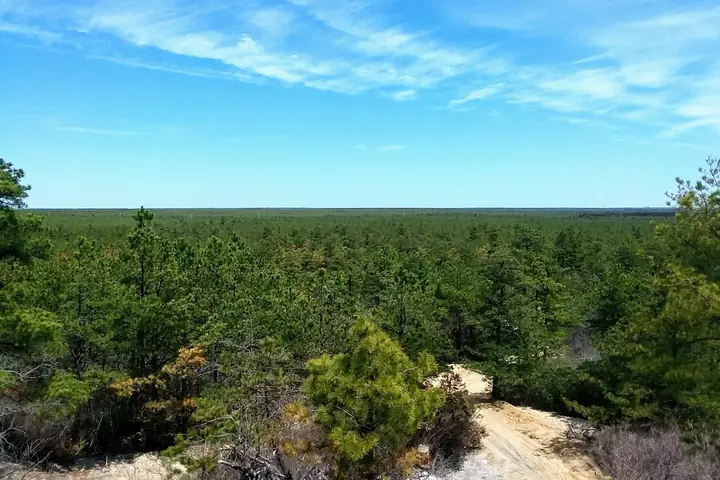
The state geological survey says water in this aquifer, which covers about 3,000 square miles of the Coastal Plain, is typically acidic and "highly corrosive," with little dissolved in it. The Pinelands Commission calls native soils "sandy, acidic, and nutrient-poor." This is a condition of the place, and a new well into the same water is likely to raise the same question.
The video on this page, from the Pinelands Preservation Alliance, is about this same aquifer feeding Pinelands streams and the bays. It speaks to ecology more than to your tap.
How acidic is the water around here?
Very, going by the closest count we have. NJDEP looked at wells in the Pinelands with data through March 2014, and most were outside the secondary range of 6.5-8.5, almost all on the low side. We found no pH rate for Ocean County by itself.
- Outside pH 6.5-8.578.7%
- Below pH 5.557.8%
- Below pH 532.2%
- Below pH 4.510.8%
Share of 12,510 Pinelands wells tested under the state act, data through March 2014. NJDEP talk, 2015.
Fourteen Ocean County towns, including Lacey, Stafford, Ocean Township and Toms River, have land in the State Pinelands Area, some of it all and some only part.
Does it matter whether I am near the coast?
It can. USGS's 1989 study found "areas with the least corrosive water are generally along the coast, whereas areas with the most corrosive water are farther inland." That is a broad pattern from an older report. Your own pH comes from your own test.
What are the signs in the house?
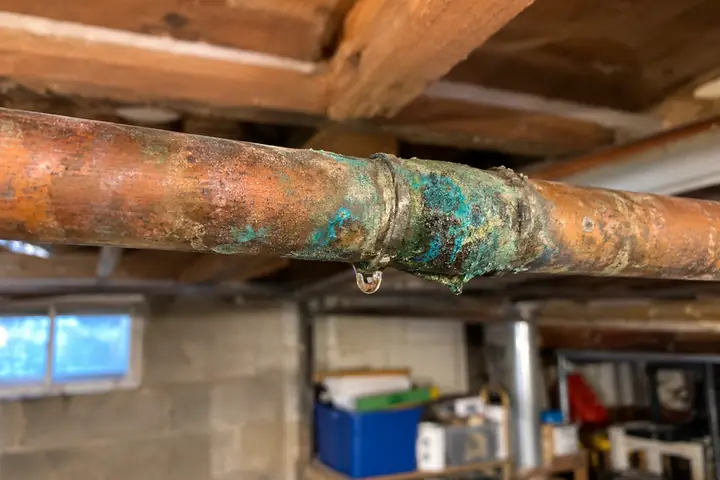
Blue-green marks and a metallic taste are the signs EPA names. Its secondary table lists copper with "metallic taste; blue-green staining," and low pH with "bitter metallic taste; corrosion." Low pH plumbing "may leach copper," in the words of the Water Quality Association. We have a separate brief on blue-green stains.
How much copper is too much?
Two numbers apply, and they do different jobs. Copper at 1.0 mg/L is EPA's secondary level, about taste and staining. At 1.3 mg/L is the federal action level on EPA's primary table.
Neither figure will show up on a standard sale test by default. Copper is not among the items listed in the state rule, so ask the lab to add it, and ask how it wants the sample taken.
| Item | Level | What it is |
|---|---|---|
| pH | 6.5-8.5 | Secondary range |
| Copper | 1.0 mg/L | Secondary level |
| Copper | 1.3 mg/L | Action level |
| Lead | 5 ug/L | Limit on the flushed well test sample |
EPA secondary and primary tables; NJDOH presentation, October 2022
Why should lead come up in a story about copper?
Because the same water can pull both from a house. The state health department warns of higher lead risk below pH 6.5. Read the lead brief for how the 5 and the 15 differ. Until you know, EPA's advice costs nothing: use only cold water for drinking, cooking and baby formula, and run the tap after water has sat.
What should I do first?
Get a certified lab number for pH, copper and lead before you buy anything. Then read the neutralizer story, since the pH on your report decides which treatment could apply. Virginia Cooperative Extension puts the working floor of a calcite filter at pH 5.3, which is a line many Pinelands wells fall under.
A home kit can show changes between lab visits, but it does not replace a certified test.
What does a repipe involve?
A repipe means replacing the home's water lines, and it is work for a New Jersey licensed master plumber. State rules carve out an exception for homeowners on their own single-family dwelling; other plumbing work goes to licensed people. Patching a leak by replacing pipe sits on the ordinary maintenance list, but we would not assume a whole-house job does. Ask the local construction office, and see our permit brief and hiring page.
Ask the plumber two things before work starts. What will this water do to the new material? And should the water be treated first?
Also asked
Could I just hook up to town water instead?
Where a line is available, that is one of the options the state health department lists. Our page on switching from a well covers the questions that follow, including what happens to the old well.
Does acid water hurt anyone directly?
EPA files low pH among the secondary, nuisance standards. The concern on these pages is what the water can carry out of the plumbing, which is why lead and copper belong on the test.
Will the utility's water do the same thing to my pipes?
Some utilities here treat for it. Ocean Township's 2015 report describes lime for pH, and Lacey MUA's 2026 report gives 7.30-7.90 for 2025, well inside the range.
Do new houses have the problem?
Age of the house does not change the aquifer. The test tells you where a given well stands.
Who to ask
- Ocean County Health Department: ask what your well's history shows and what the department advises on a low pH.
- Your town's construction office: ask what permit a repipe needs.
- A New Jersey certified laboratory: ask to add copper to your test and how to sample for it.
- State license verification page at New Jersey Consumer Affairs: check a plumber's license.
Where this comes from
- USGS WRI 87-4181, 1989 - corrosive groundwater near Ocean County, coast and inland pattern.
- NJ Geological Survey circular on the Kirkwood-Cohansey - aquifer description (archived copy).
- NJDEP Private Well Testing Act talk, 2015 - Pinelands pH percentages.
- EPA Secondary Standards - copper, pH.
- EPA National Primary Drinking Water Regulations - copper action level.
- WQA on acidity - copper leaching.
- N.J.A.C. 5:23-2.15 - licensed work and the homeowner exception (text on Cornell's Legal Information Institute).
- Virginia Cooperative Extension BSE-259 - calcite limit of pH 5.3.