On Ocean County sand, septic rules begin with distance from the well
Septic in Ocean County sand runs under one state rule, N.J.A.C. 7:9A: a permit from the local board of health, set distances from wells and buildings, and more rules in the Pinelands. Upkeep comes down to inspecting, pumping and watching for trouble.
Compiled from the sources listed at the end. Sources checked .
For houses on septic or sewer, in Lacey & Forked River, Waretown & Ocean Township, Barnegat, Stafford & Manahawkin, Toms River.
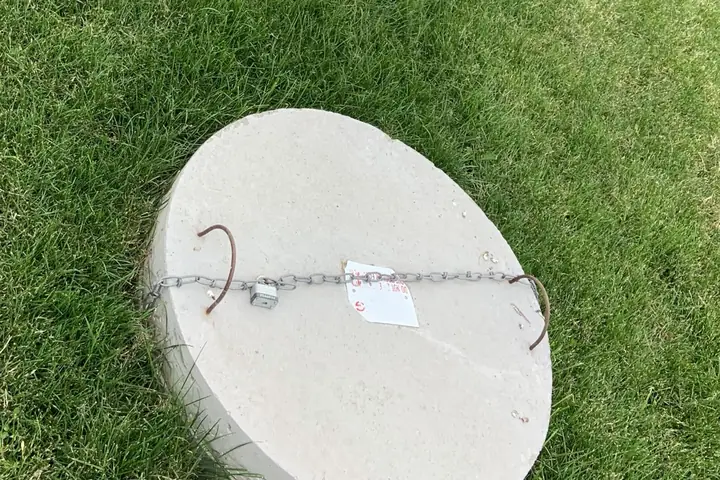
The Pinelands Commission describes the native soils there as "sandy, acidic, and nutrient-poor." Fourteen Ocean County towns lie all or partly in the State Pinelands Area: Barnegat Township, Beachwood, Berkeley, Eagleswood, Jackson, Lacey, Lakehurst, Little Egg Harbor, Manchester, Ocean Township, Plumsted, South Toms River, Stafford and Toms River.
What does sand change for a septic owner?
Sand raises the stakes on distance, because a house's well and its septic field can sit in the same ground. Anyone who has dug at the shore knows water drops through sand fast.
What the record does show is the shape of the water supply. The New Jersey Geological Survey calls the Kirkwood-Cohansey a water-table aquifer covering about 3,000 square miles of the Coastal Plain (archived copy). State results show nitrate over the 10 mg/L limit in 2.1% of Pinelands wells through March 2014 and 0.5% of Ocean County wells from September 2002 to April 2007. Those numbers do not say where the nitrate came from. Our brief on nitrate and coliform covers the test.
What does the state rule require before any work?
A permit comes first. The state's permit section bars construction, installation, repair or alteration until one is issued. The local board of health, or whoever acts for it, issues it, and plans generally carry an engineer's seal. Our story on who approves septic work sets out each role.
How far must a tank and field sit from a well?
A septic tank must sit 50 feet from a well and a disposal field 100 feet, under Table 4.3 of the rule. The field distance may drop to 50 feet where the well has a watertight casing to 100 feet or more, or a sealed casing. A disposal field also has to stay 50 feet from a watercourse.
| Part | To well | To water service line | To building | To property line |
|---|---|---|---|---|
| Septic tank | 50 | 10 | 10 | 5 |
| Disposal field | 100, or 50 with qualifying casing | 10 | 25, occupied | 10 |
N.J.A.C. 7:9A-4.3 Table 4.3, text on Cornell's Legal Information Institute
A building sewer must stay 25 feet from a well. Check your lot against those numbers, and mark any well nearby, including one over the fence.
Does the Pinelands add its own rule?
Yes, and the Pinelands Commission is the place to ask about it. A 2018 Commission presentation calls 2 mg/L of nitrate-nitrogen the Pinelands standard, and the Commission's own rule, N.J.A.C. 7:50-6.84, runs long. Lot-size rules are for the Commission to state, so none appear here. If your lot is in one of the 14 towns above, ask whether it falls in the Pinelands Area before anyone draws plans.
How close can a field sit to the water table?
The rule has a separation requirement, but we could not confirm the number. The engineer drawing the plans and the board of health will work from the current text of N.J.A.C. 7:9A. Ask them what they found on your lot.
What upkeep does EPA ask for?
EPA says to have the system inspected at least every three years, and tanks are typically pumped every three to five. The pumping brief goes further. The video on this page, from New Hampshire's environment agency in 2019, adds the daily habits: no grease, coffee grounds, diapers or cat litter down the drain, no parking on the field, no trees near it. Its licensing and cost references are New Hampshire's.
What are the signs of a system in trouble?
The state rule's malfunction section names them:
- sewage ponding or breakout on the ground
- seepage into below-ground parts of a building
- a back-up with no physical blockage in the house plumbing
- leaks from tanks, pipes or boxes
- contamination of a nearby well or surface water
Notice to the local authority is due at once, in the rule's terms, and repairs wait for approval.
Also asked
Does sandy soil mean a septic system works better?
It means water leaves the field quickly, which is a different thing from being treated. Your engineer and board of health judge the lot, not the look of the soil.
Does the distance rule cover my neighbor's well?
The table sets distance to a well and does not limit it to the owner's own. Mark any nearby well on a sketch before plans are drawn, and let the designer check it.
Is nitrate in my well proof that a septic system is the cause?
No. A well test shows the amount and leaves the source open. Even in the Metedeconk River, a USGS talk could say only that the signals were consistent with septic, sewage or manure.
Do all 14 Pinelands towns follow Pinelands septic rules everywhere?
Not necessarily. The state's list says all or part, and several of these towns lie partly in the Reserve as well. Only the Commission can place your lot.
Who to ask
- Ocean County Health Department, Consumer Health: ask where septic plan review for your address goes and what is on file.
- New Jersey Pinelands Commission: ask whether your lot is in the Pinelands Area and what septic rules apply to it.
- Your town's board of health: ask who acts as administrative authority for your street.
Where this comes from
- N.J.A.C. 7:9A-4.3 - separation distances (text on Cornell's Legal Information Institute).
- N.J.A.C. 7:9A-3.4 - malfunction signs and notice (text on Cornell's Legal Information Institute).
- N.J.A.C. 7:9A-3.5 - permit requirement (text on Cornell's Legal Information Institute).
- EPA, How to Care for Your Septic System - inspection and pumping schedule.
- Pinelands Facts, December 2021 - soils.
- Pinelands Area Municipalities, August 2021 - town list.
- NJDEP talk on the Private Well Testing Act, 2015 - Pinelands nitrate share.
- NJDEP Private Well Testing Act report, July 2008 - Ocean County nitrate share.
- OSHA, hydrogen sulfide in workplaces - septic tank work exposure.
- Pinelands Commission presentation, April 27, 2018 - nitrate standard.
- N.J.A.C. 7:50-6.84 - Pinelands septic rule (text on Cornell's Legal Information Institute).
- New Jersey Geological Survey circular - the aquifer (archived copy).