New Jersey's sale test has checked wells for three PFAS since 2021
PFAS on a private well in New Jersey is tested at sale and by landlords, for PFNA, PFOA and PFOS since December 1, 2021. Boiling does not remove them. Carbon, reverse osmosis and ion exchange can, if you check the certification.
Compiled from the sources listed at the end. Sources checked .
For houses on a private well, in all our towns.
The state's rule was amended effective June 1, 2020, and testing began on the later date. The state health department describes PFAS on a well test as a "consumer information law" item. So you get the number, and what you do next is up to you. Our sale story has the mechanics.
An older report may have no PFAS lines at all. If your last full test came before December 2021, you may never have had one. The video on this page, from Michigan's environment agency, makes the same case: PFAS cannot be seen, smelled or tasted, and neighboring wells can draw from different aquifers. Its prices and links are Michigan's.
What limits apply in New Jersey?
New Jersey's limits are PFNA 13 ppt, PFOA 14 ppt and PFOS 13 ppt. The state health department says that "in 2018, NJ became the first state to establish an enforceable drinking water standard for a PFAS chemical," and that PFOA and PFOS followed in 2020. The federal limits arrived in April 2024 and are lower.
| Chemical | New Jersey | Federal, April 2024 rule | Federal status |
|---|---|---|---|
| PFOA | 14 ppt | 4.0 ppt | Kept in the May 2026 proposal |
| PFOS | 13 ppt | 4.0 ppt | Kept in the May 2026 proposal |
| PFNA | 13 ppt | 10 ppt | Proposed to be rescinded |
| PFHxS | Not among the three | 10 ppt | Proposed to be rescinded |
| GenX | Not among the three | 10 ppt | Proposed to be rescinded |
| Mixtures | Not among the three | Hazard Index 1.0 | Proposed to be rescinded |
NJDOH, updated April 2024; EPA PFAS page, as read November 3, 2026
Is the federal rule changing?
Parts of it may be, and nothing is final as far as EPA's page showed on November 3, 2026. EPA announced two proposed rules on May 18, 2026. One upholds the PFOA and PFOS limits and lets systems ask for two more years, to 2031. The other would rescind the limits for PFHxS, PFNA, GenX and the Hazard Index.
Those timetables are written for water systems. On a private well, nobody's compliance calendar runs for you. Your report still compares you to New Jersey's numbers, and you can read it against EPA's 4.0 too.
Does boiling help?
No. The state health department says boiling does not remove these PFAS. Boiling also leaves you nothing to measure. A certified lab result is the only way to see what is there.
Do I need to stop showering or doing laundry?
The state says no significant exposure comes that way. Its page calls showering, bathing, laundry, dishwashing and rinsing produce "not significant" exposure. Attention belongs on water you drink and cook with.
What treatment reduces PFAS?
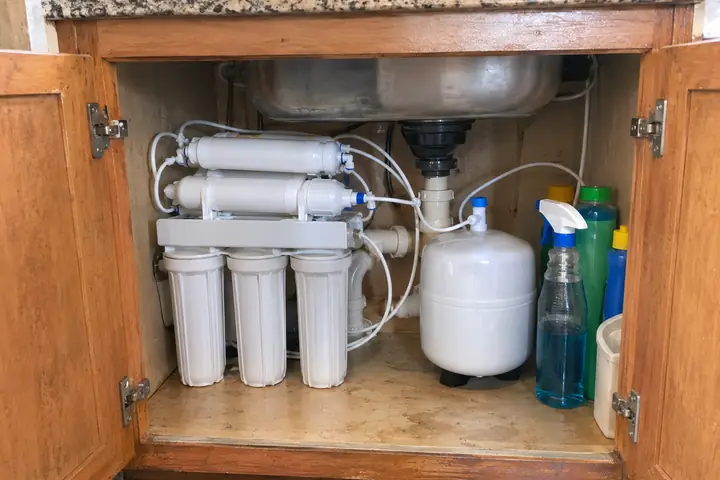
Reverse osmosis, ion exchange resins, activated carbon (granular or powdered) and other specialized media can all reduce PFAS, the state health department says. It also tells you what to look for: NSF/ANSI 53, and which version of it. Its page gives below 20 ppt for the 2022 version.
Look at that number beside New Jersey's limits of 13 and 14. A certified filter's claim and a state limit are different things, so a test after install is the way to know where you ended up.
Is town water a way out?
Sometimes, and it comes with its own reports. A public water utility above a New Jersey limit must act to reduce levels, and results appear on NJDEP's Drinking Water Watch. Lacey MUA's 2026 report says all its 2025 PFAS results, regulated and unregulated, were non-detect. We cannot say the same for every system; read yours. Our notice page and switching story go further.
Also asked
Is a neighbor's clean test good enough for my house?
No. Wells can draw from different depths and aquifers, and results are confidential anyway. Your own report is the one that counts.
What should I do with a number above the state limit?
Start with the county health department, then look at treatment or a public line where available. The Act does not itself force a fix, and the choice sits with you and any buyer.
Does the test cover every PFAS chemical?
The sale test names PFNA, PFOA and PFOS. EPA's rule names others, including PFHxS and GenX, so raise it with the lab if you want them checked.
Is a state loan available for PFAS treatment?
A state housing finance agency loan covered water above primary standards as of January 2023. Ask the agency whether a PFAS result qualifies.
Who to ask
- A New Jersey certified laboratory: ask for PFAS results in ppt, and what else it can add.
- Ocean County Health Department: ask how a PFAS result affects a county certification at a sale.
- NSF/ANSI listings: ask any seller for the current certification and version for PFAS reduction.
Where this comes from
- NJDOH, PFAS in Drinking Water, updated April 2024 - state limits, boiling, exposure, treatment, utilities.
- EPA PFAS drinking water rule page, as read November 3, 2026 - April 2024 rule and May 18, 2026 proposals.
- EPA news release, May 14, 2025 - keeping PFOA and PFOS limits.
- N.J.A.C. 7:9E-2.1 - PFAS test start date (text on Cornell's Legal Information Institute).
- Lacey MUA 2026 water quality report - 2025 PFAS results.
- NJDOH Private Wells Drinking Water Facts, January 2023 - loan program.